



hectares
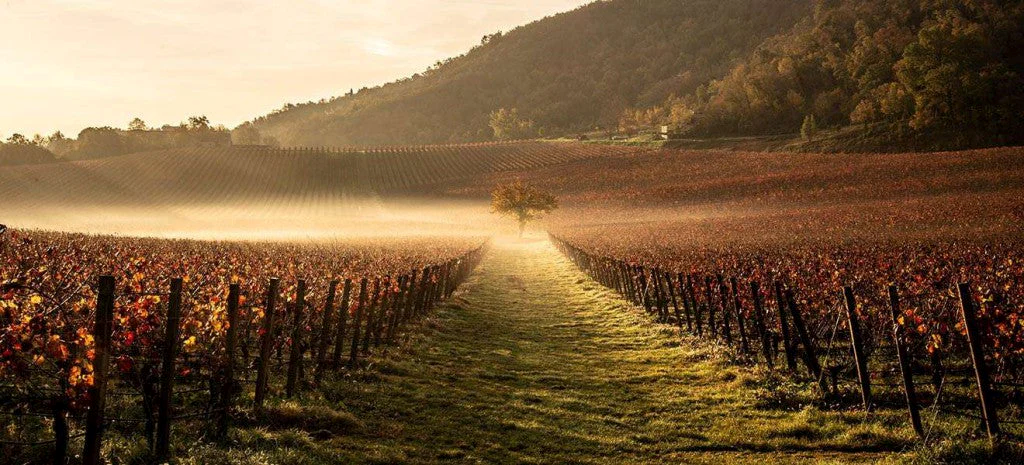
Across Soave Classico and the Colli Berici
INAMA · United States A Sense of Place
A family’s eye for extraordinary places. Garganega in Soave Classico. Carmenere in the Colli Berici. Three generations discovering what these hills can give.
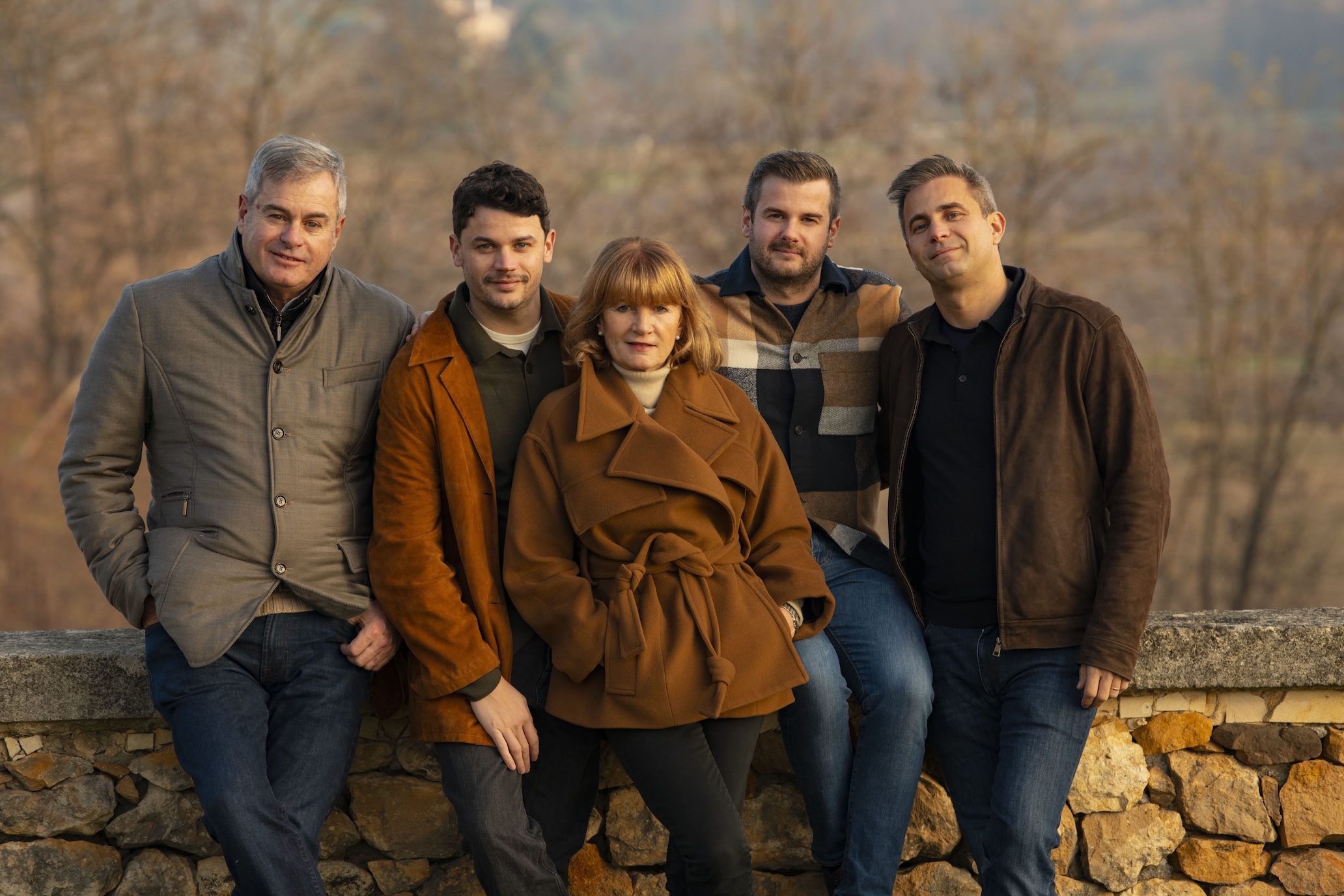
Across Soave Classico and the Colli Berici
Giuseppe · Stefano · Matteo, Alessio and Luca
Volcanic whites · limestone reds
A focused American portfolio, read through place and purpose
01 · The conviction
Giuseppe saw the promise of old Garganega vines in the Classico hills. Stefano carried that curiosity into a second landscape. Today, Matteo, Alessio and Luca bring greater precision to the places their family chose.
1965
Choose the land
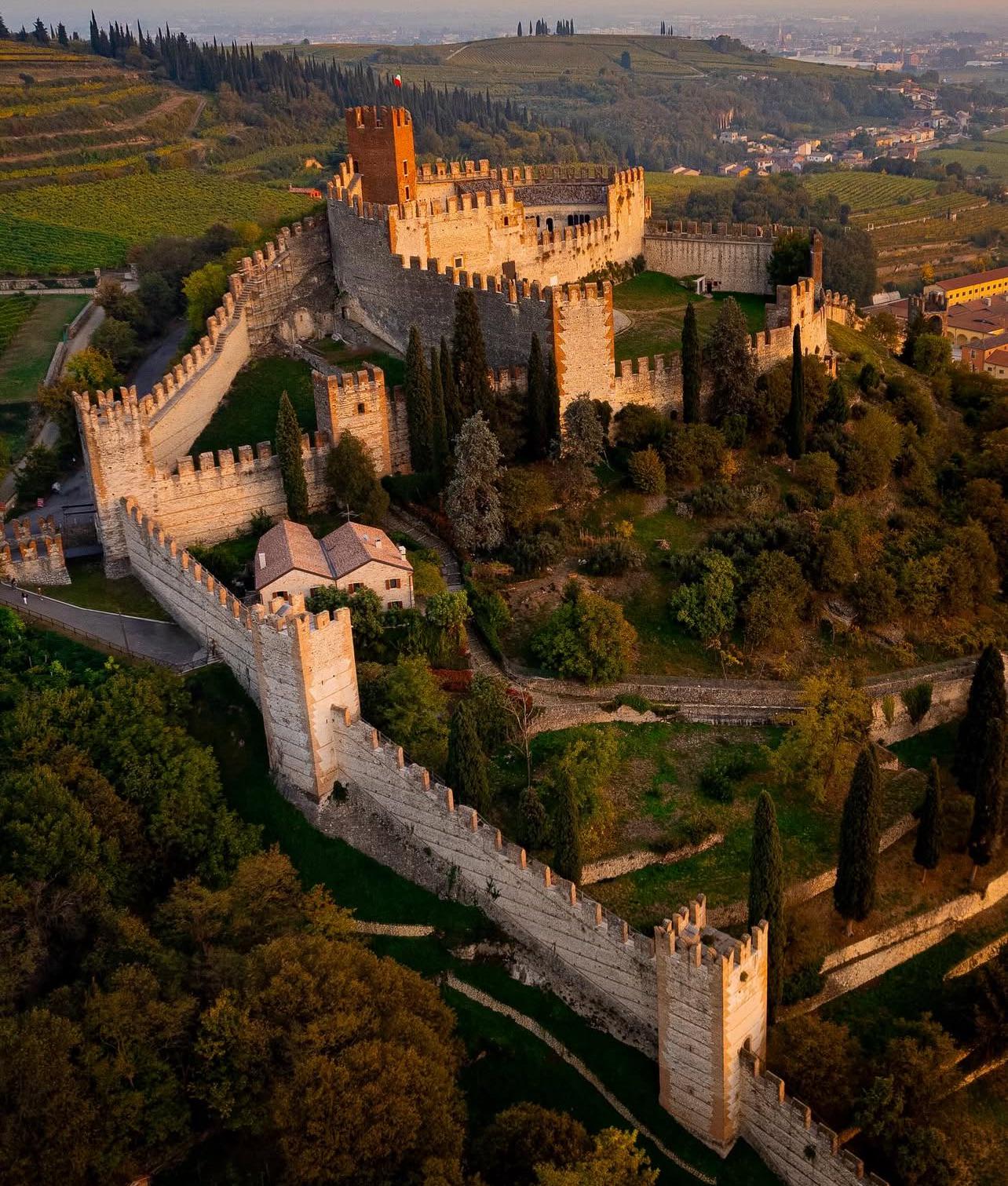
Giuseppe began acquiring old vineyards on Monte Foscarino in 1965. Those hillside parcels became the foundation of INAMA’s whites.
1991
Widen the vision
Stefano gave the estate its labels and an experimental spirit: Sauvignon in Soave, then a second territory for reds in the Colli Berici.
From 2010
Deepen the understanding
Matteo, Alessio and Luca refine that inheritance through parcel observation, vineyard renewal and greater precision in the cellar.
Giuseppe’s purchases of old vineyards made a long-term claim on the historic Classico hills. This is the estate’s foundational act: land first, then reputation.
Stefano developed the labels, Sauvignon wines and the Colli Berici project. The range widened, but the method remained comparative: understand a place by making its differences visible.
Matteo, Alessio and Luca have deepened parcel observation, vineyard renewal and environmental work. The third generation’s role is precision rather than reinvention.
Estate history and interpretation based on the supplied INAMA deck and INAMA’s account of continuous improvement ↗
“We produce the wine we love. We don’t follow trends.”Stefano Inama
02 · The places
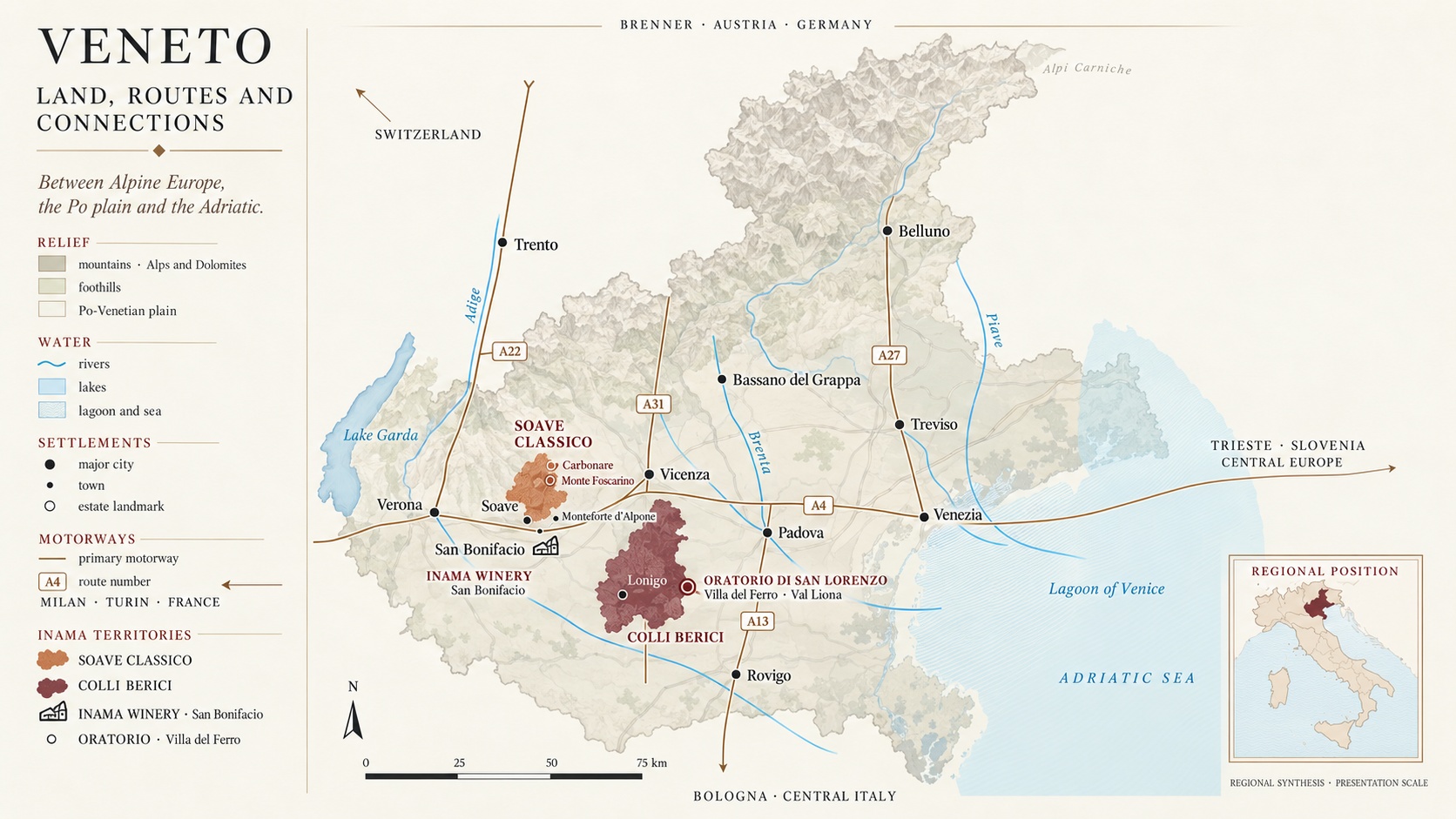 Open full map ↗
Territory I
Old Garganega grows on weathered volcanic basalt in the historic hills east of Verona.
Territory II
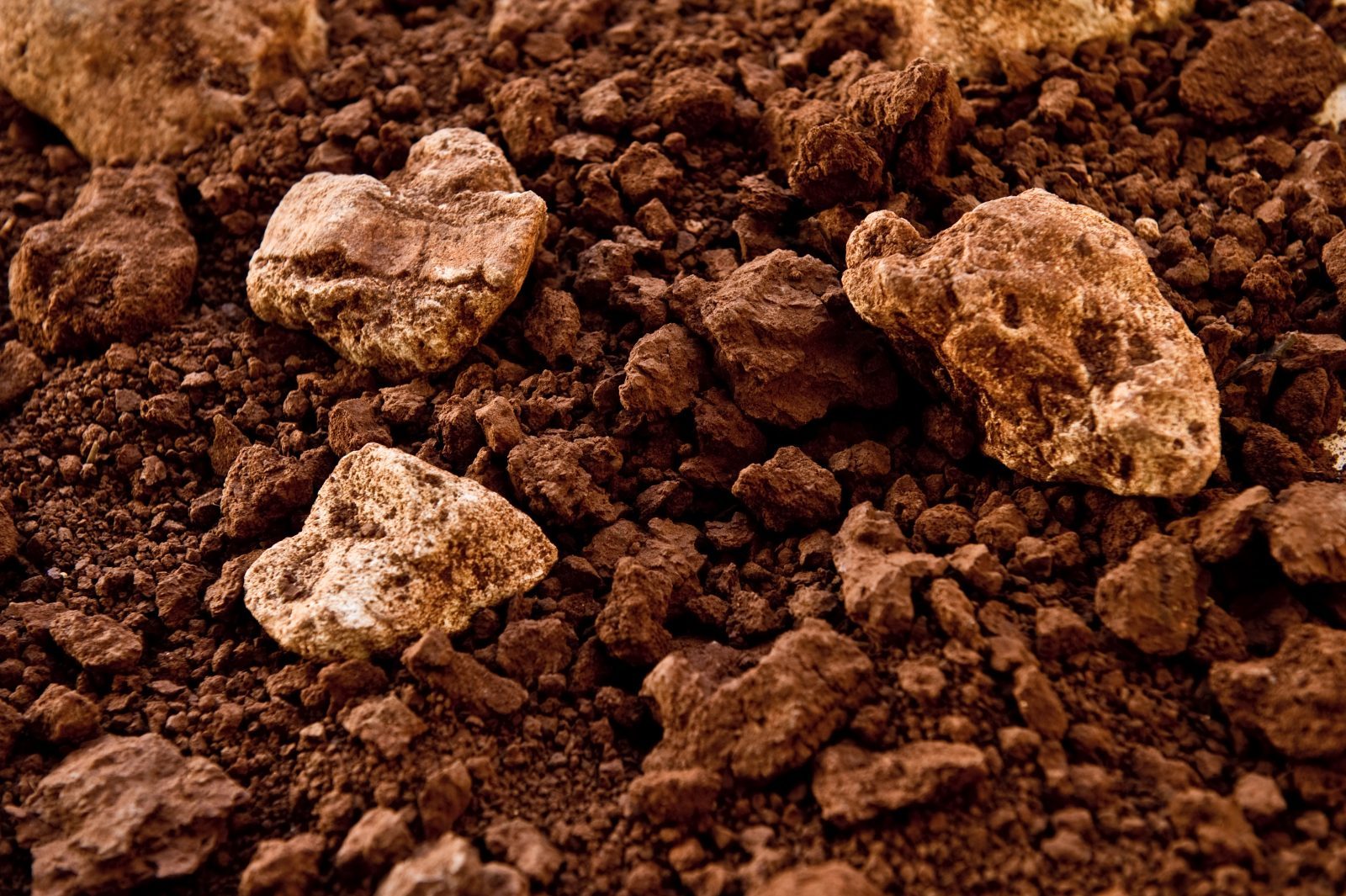
Carmenere and old Merlot grow through limestone and red clay in the hills south of Vicenza.
Open the atlas
Veneto is the frame, not the explanation. INAMA works in two inland hill systems: the Classico slopes east of Verona and the Berici Hills south of Vicenza.
03 · The choices
A hillside sets the conditions. Protecting older vines, caring for the soil and choosing when to pick help turn that potential into wine. Precision begins well before the cellar.
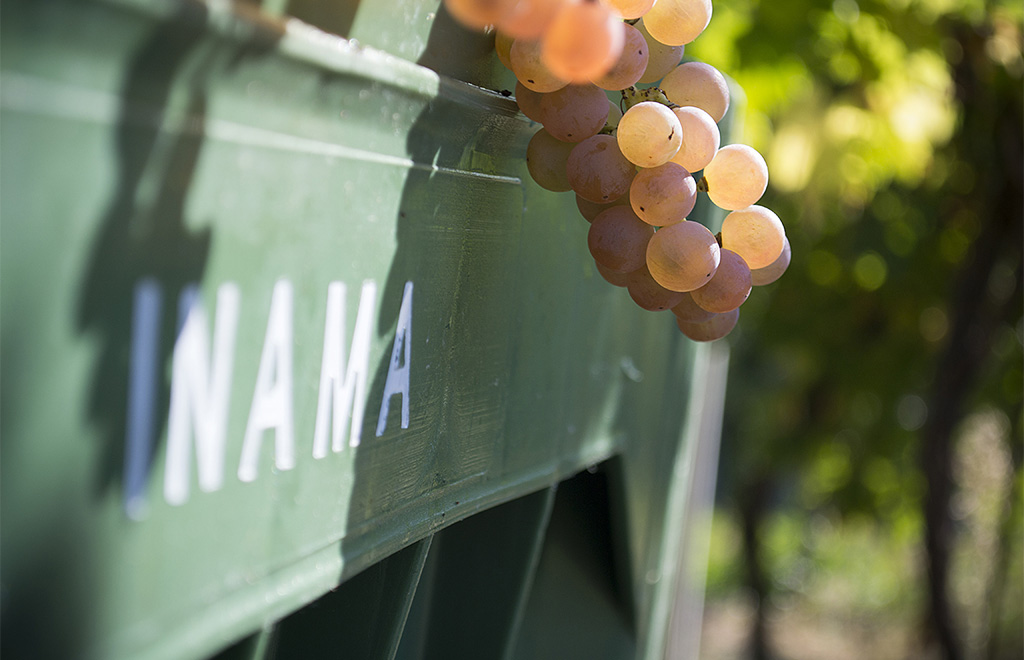
INAMA dates the removal of herbicides and chemical fertilisers to 2009. Ground cover, lighter machinery and Simonit & Sirch pruning support soil care and the continuity of older vines. Hand harvesting in separate passes follows the ripeness of each parcel.
INAMA’s vineyard method ↗INAMA states that its regenerative approach is certified by Diversity Ark. The scheme examines soil, insects and plants to assess the farm’s agroecosystem and guide its management.
Explore Diversity Ark ↗ · The estate’s certification statement ↗WineNews reported INAMA’s work with Derenoncourt Consultants in June 2025. Outside expertise forms part of the family’s commitment to refining its vineyard and cellar decisions.
Published collaboration ↗04 / Wines
Volcanic whitesSoave Classico
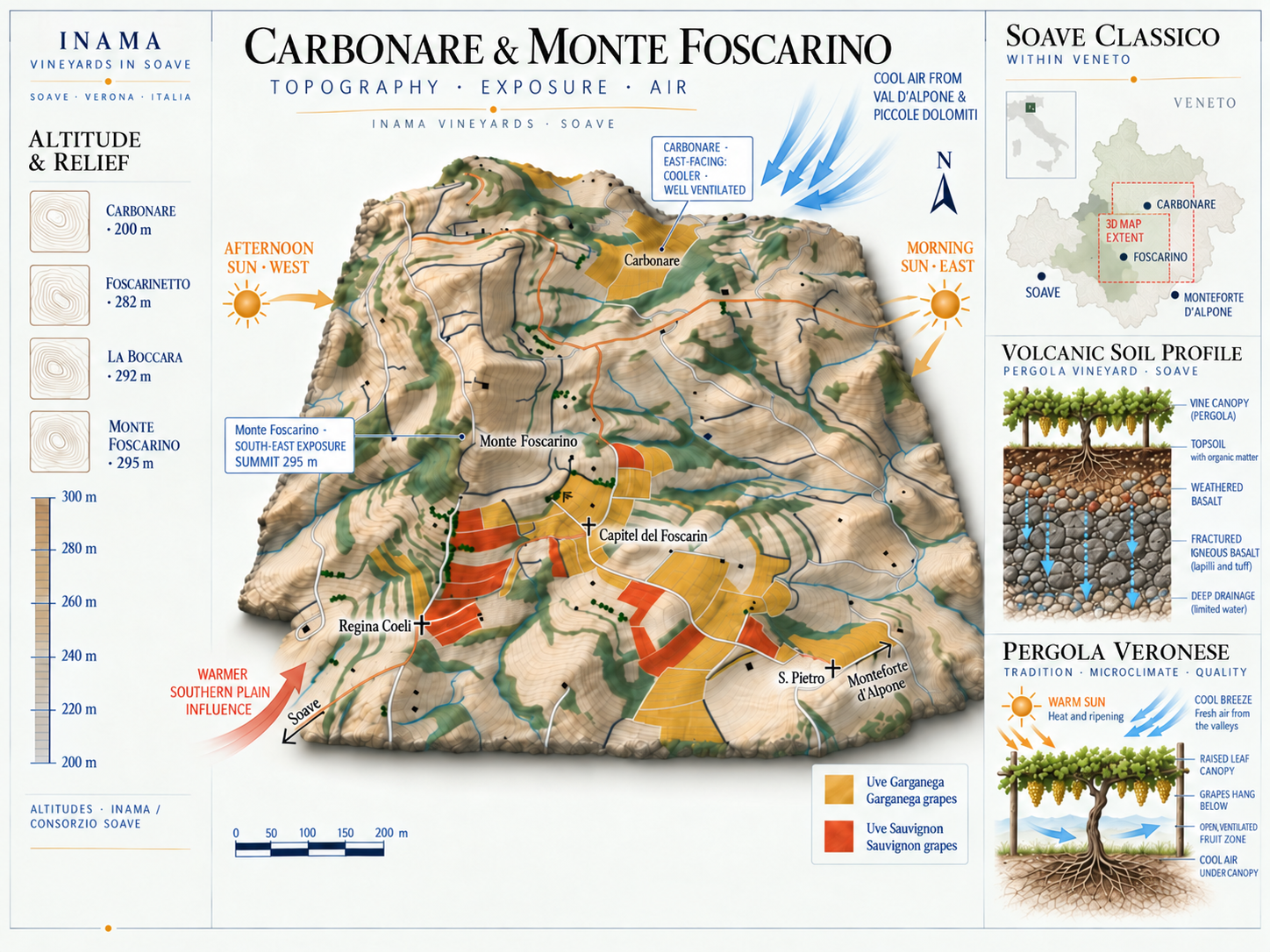
Fifty hectares in the historic hillside zone. INAMA reads altitude, exposure, volcanic formations and moving air together—then adapts picking and cellar choices to the parcel and vintage.
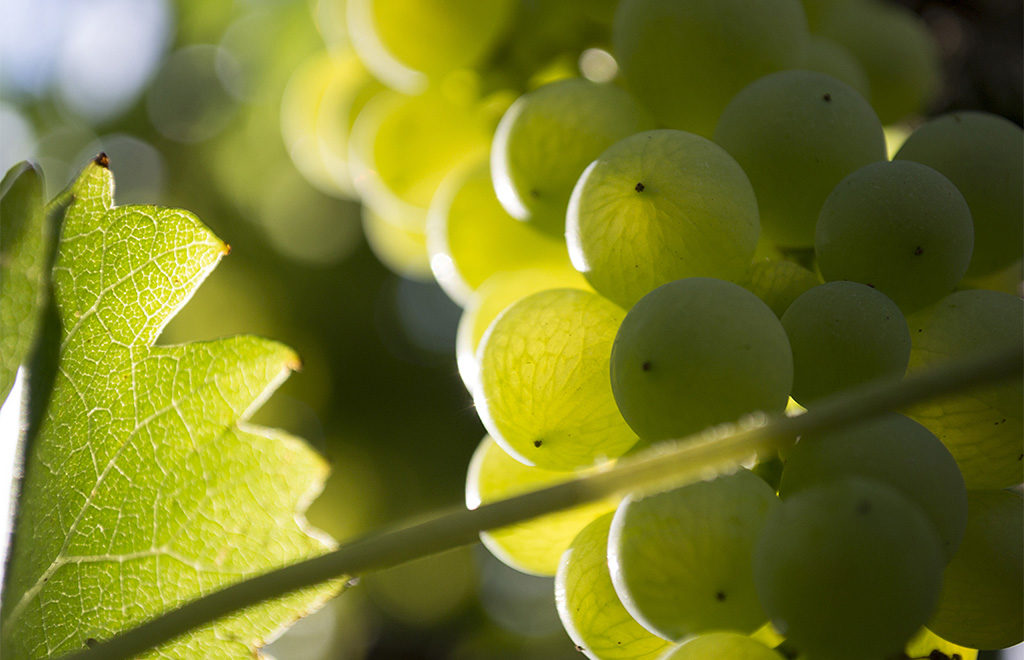
The grape · Soave Classico
Flowers, orchard fruit and almond. Exposure, canopy and picking shape its balance; parcel and cellar choices reveal its range.
Fresh, floral Garganega.
The first encounter with the Classico hills.East-facing vineyard. Steel.
Tension, salinity and a precise line.Old pergolas. Mixed vessels.
Flowers, texture and breadth.Garganega reaches the Classica area in Roman times.
Giuseppe begins buying old vineyards on Monte Foscarino.
Vigneti di Foscarino establishes the estate’s cru approach.
I Palchi begins with the best micro-parcels on Foscarino’s terraces.
Garganega ripens late. Pergola training can shelter bunches while maintaining airflow. INAMA then works with parcel choice, harvest decisions and vessels to distinguish each wine.
Consorzio Soave · production rules ↗The white-wine hierarchy
Read upwards: from the harmony of the Classico hills, through two contrasting crus, to a berry-by-berry selection from Foscarino’s finest old terraces.
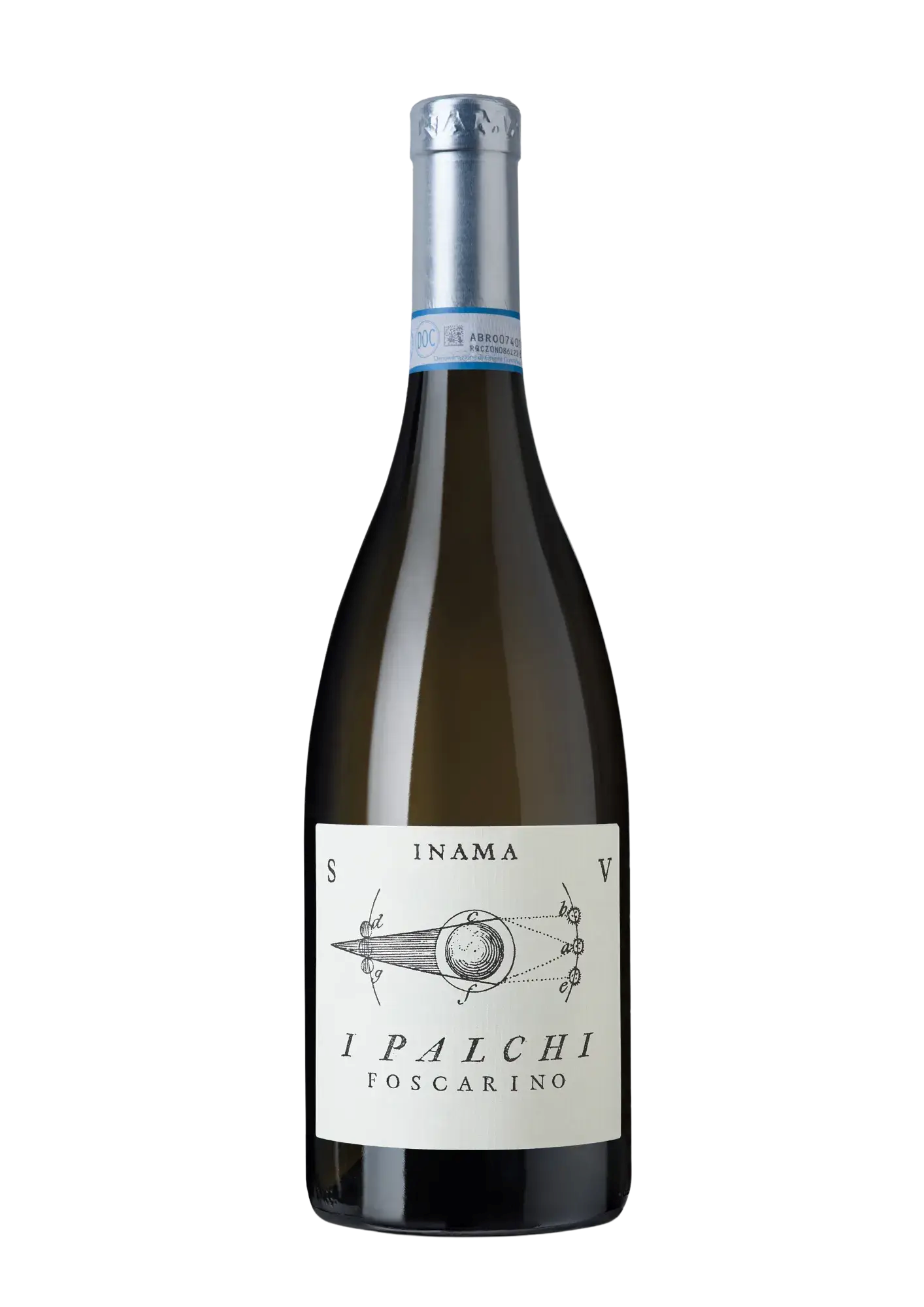
Best old-vine terraces of Foscarino · berry-by-berry selection · concentrated, complete, built for the fine-wine table.
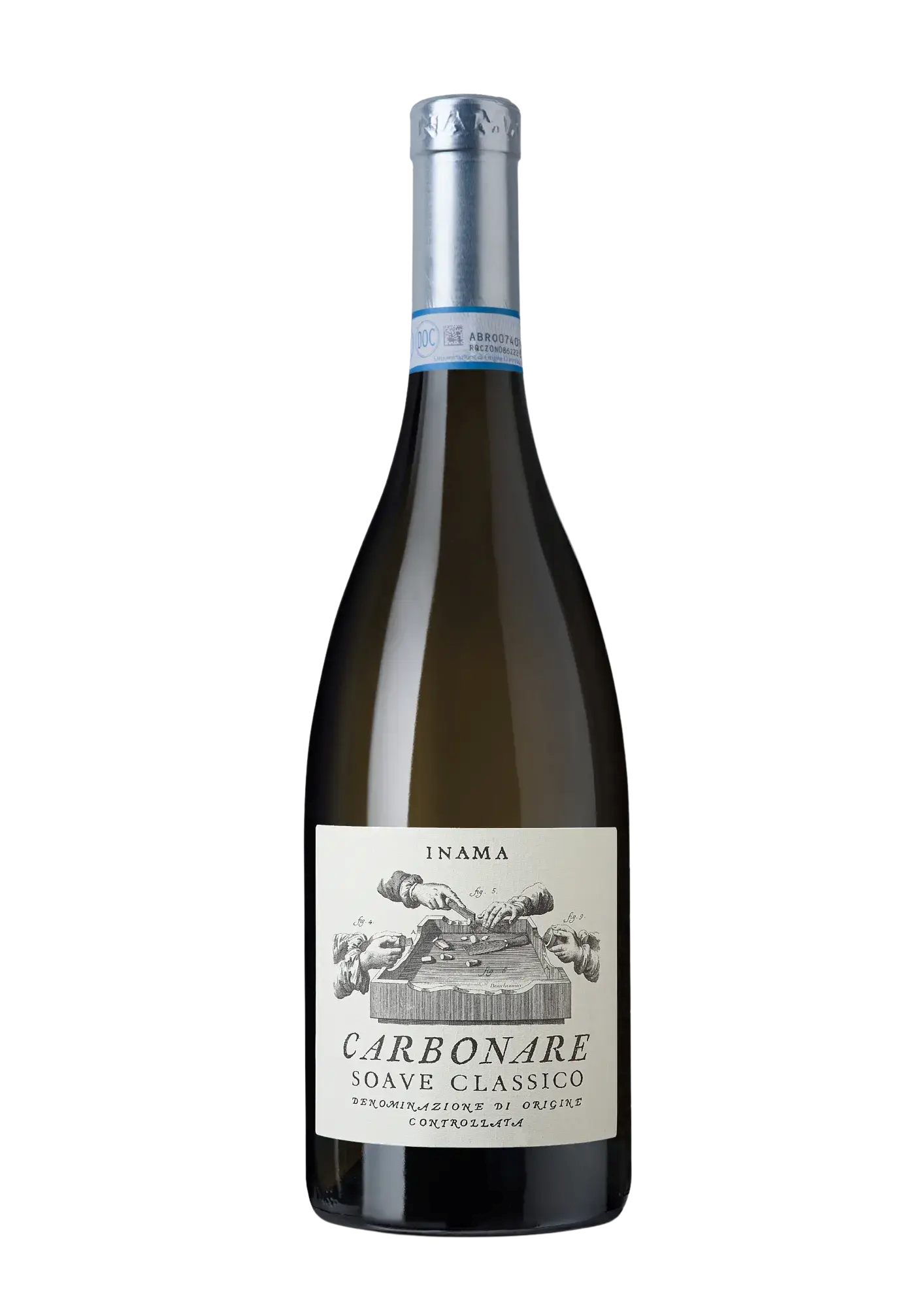
Morning light · cool Val d’Alpone air · stainless steel · tension, salt and line.
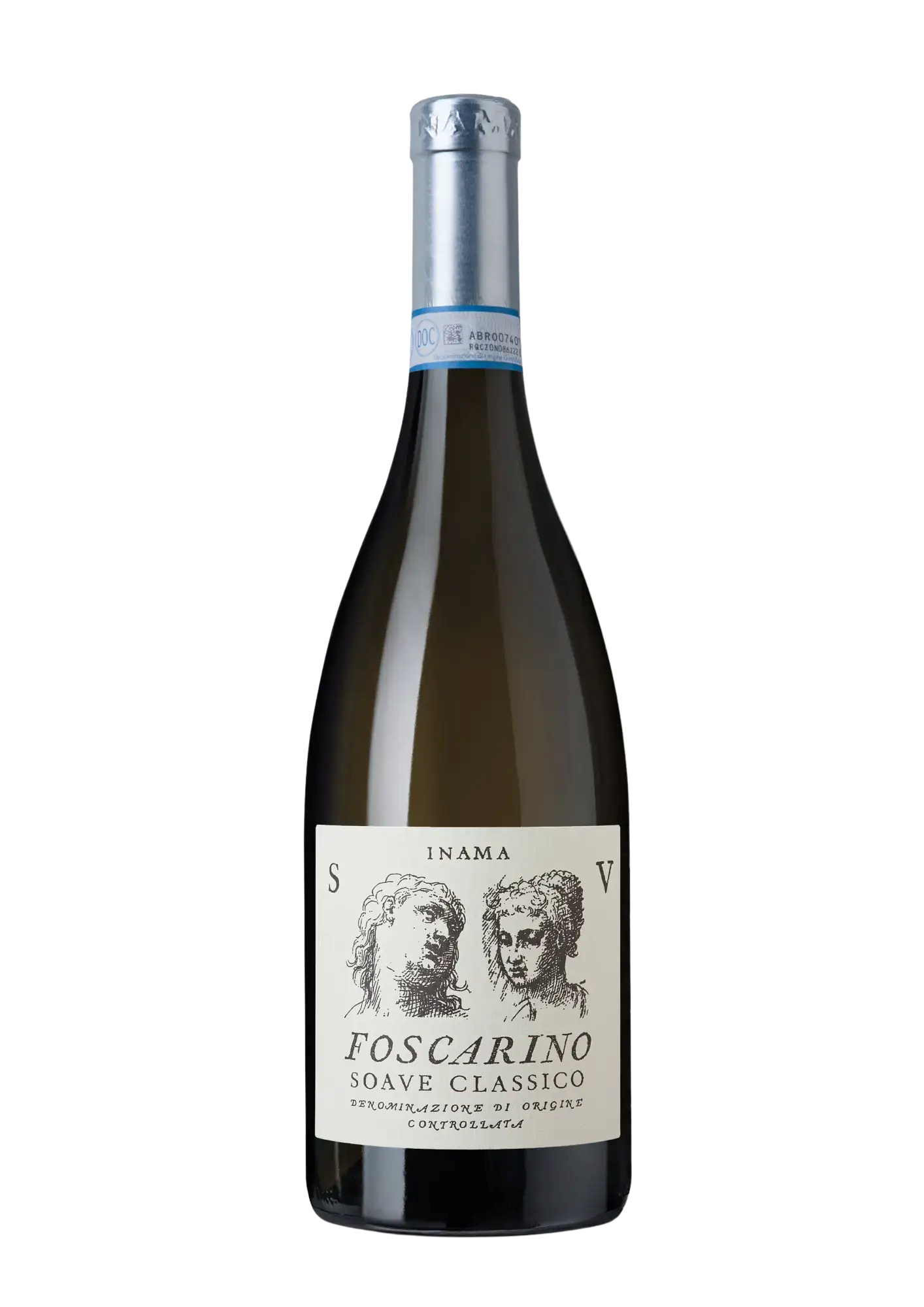
Old pergola terraces · mixed vessels · flowers, orchard fruit and breadth.
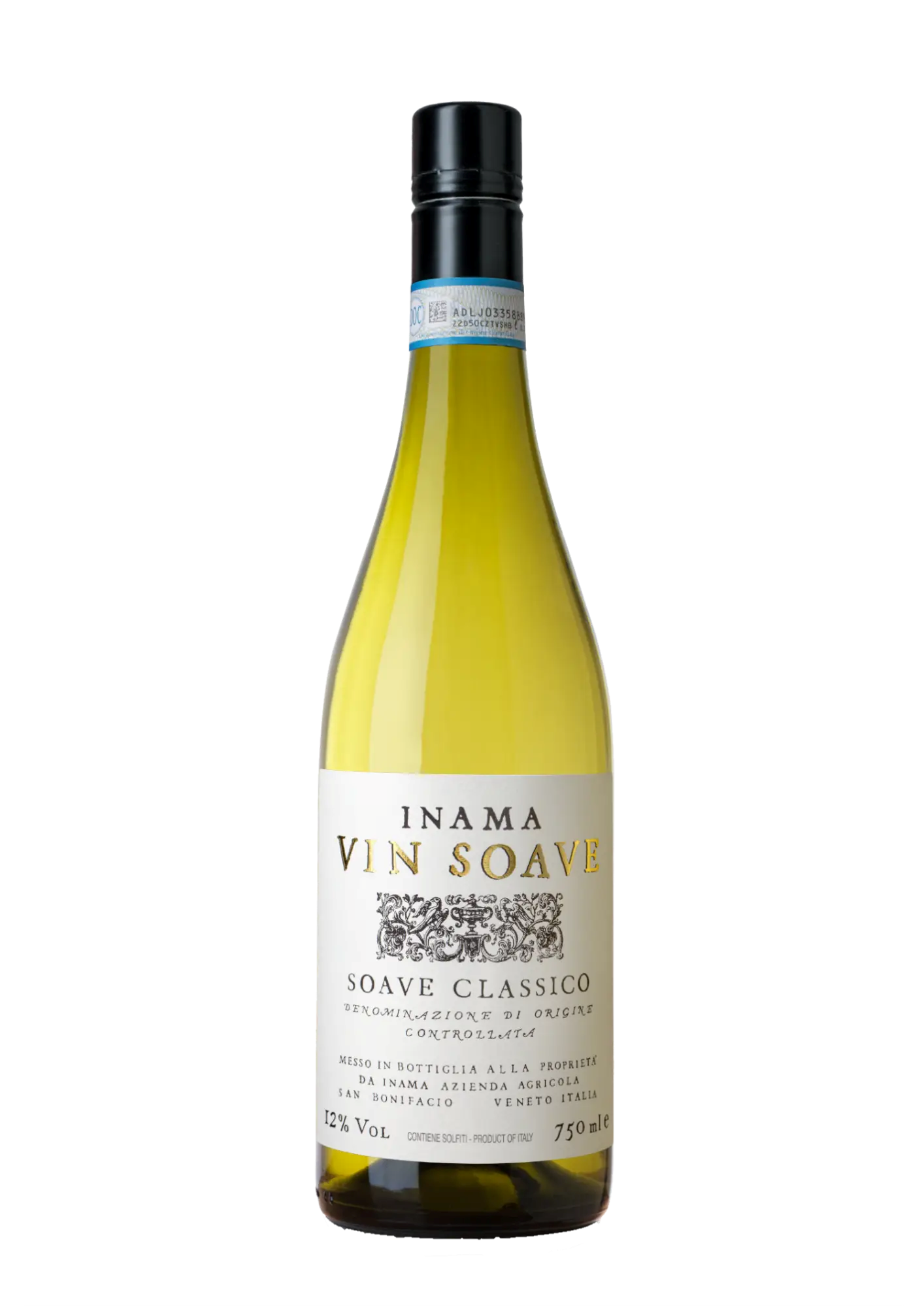
A blend of hillside parcels and vine ages · steel · the harmonious, everyday expression of Soave Classico.
A site study
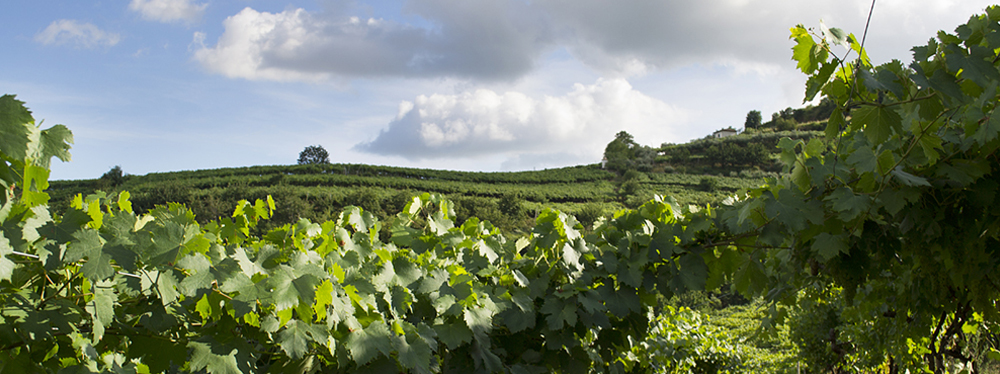
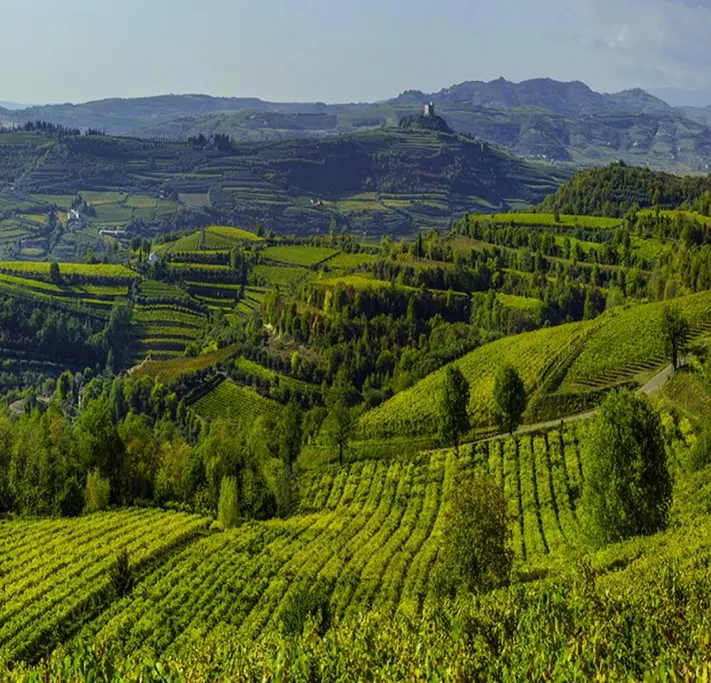
Carbonare’s east-facing site and Foscarino’s south-east exposure give the comparison its starting point. Vine age, picking and cellar choices complete the difference.
Gentle morning sun
Cool air from Val d’Alpone
Steel
Tension · salinity · line
Greater solar warmth
Old pergolas on terraces
Mixed vessels
Flowers · fruit · breadth
 Open full map ↗
04 / Wines
Limestone redsColli Berici
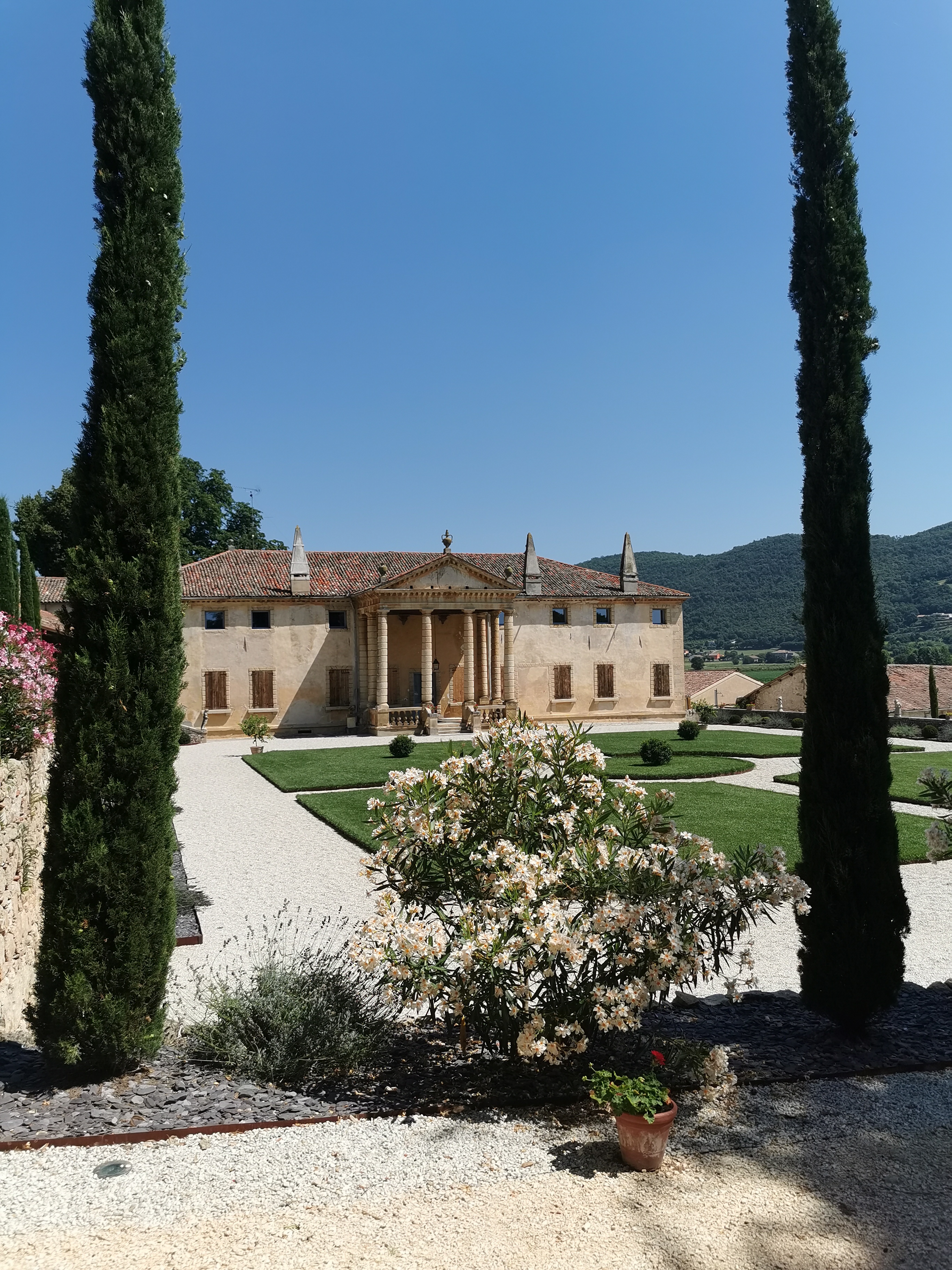
South of Vicenza, INAMA sought conditions in which Carmenere could complete its long season. Warm days, cooler nights, woodland and red clay over marine limestone form the setting; farming and selection determine how that potential reaches the wine.
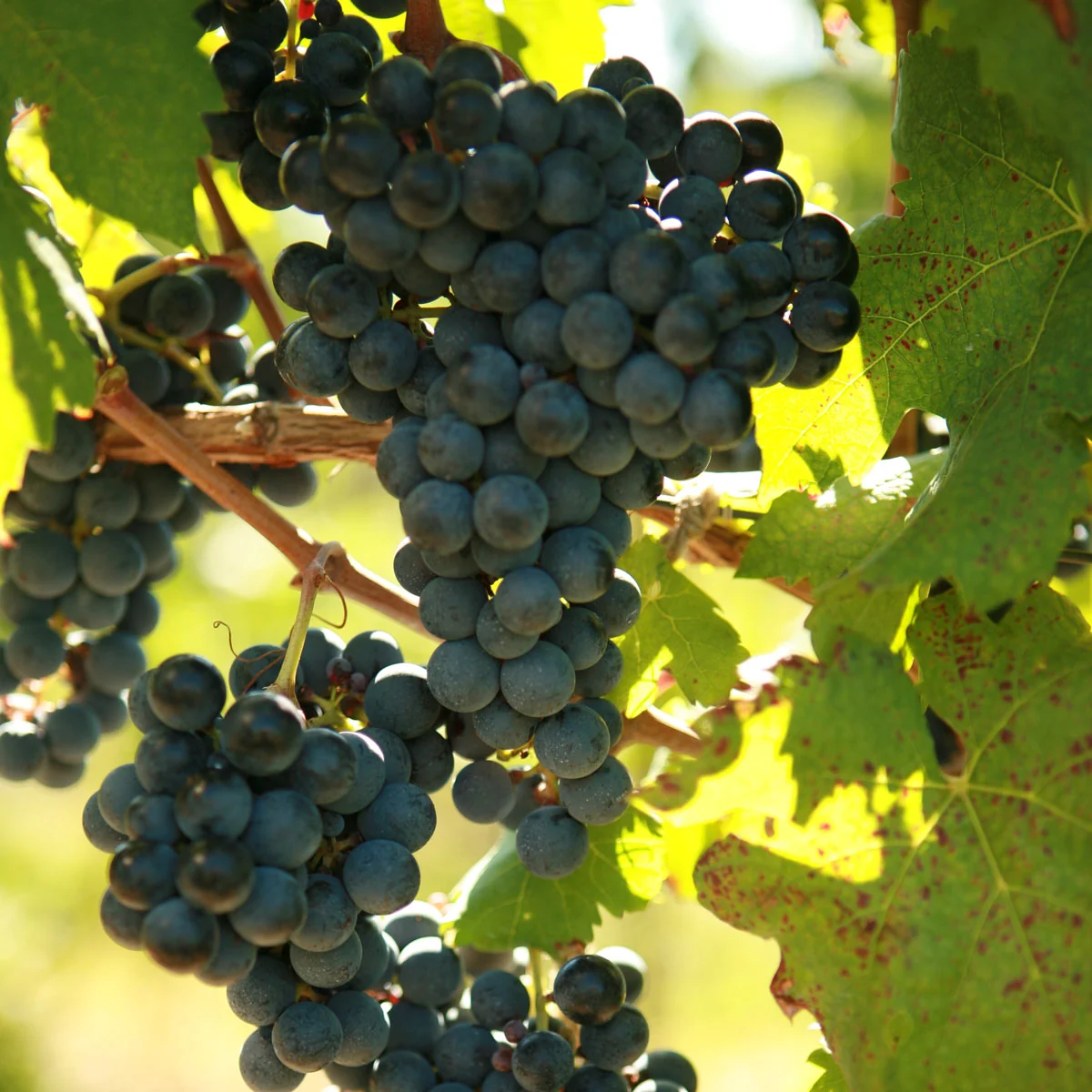
The grape · Colli Berici
Dark fruit, pepper and herbal lift. A long growing season in the Berici hills gives this late-ripening grape time to find its balance.
Carmenere with Merlot.
Fruit, spice and an easy way in.Cabernet Sauvignon, Franc & Carmenere.
A familiar frame with a Venetian accent.Selected Carmenere Riserva.
The valley’s most focused expression.INAMA begins planting Carmenere in the Colli Berici.
The first Bradisismo reveals Carmenere’s role in the blend.
The first Oratorio selection shows the potential of pure Carmenere.
Oratorio inaugurates Colli Berici DOC Carmenere Riserva.
Carmenere’s methoxypyrazines can register as green before physiological maturity. INAMA’s objective is to bring pepper and herbal lift into balance with dark fruit and fresh tannin.
Consorzio Colli Berici · Carmenere ↗A territory study
Oratorio is a small valley enclosed by woodland. Lonigo is a south-facing estate where Cabernets and Carmenere meet iron-rich clay, marine limestone and basalt.
Pure Carmenere
Oratorio Riserva
Red clay over limestone
Cabernets + Carmenere
Bradisismo
Iron-rich clay · limestone · basalt
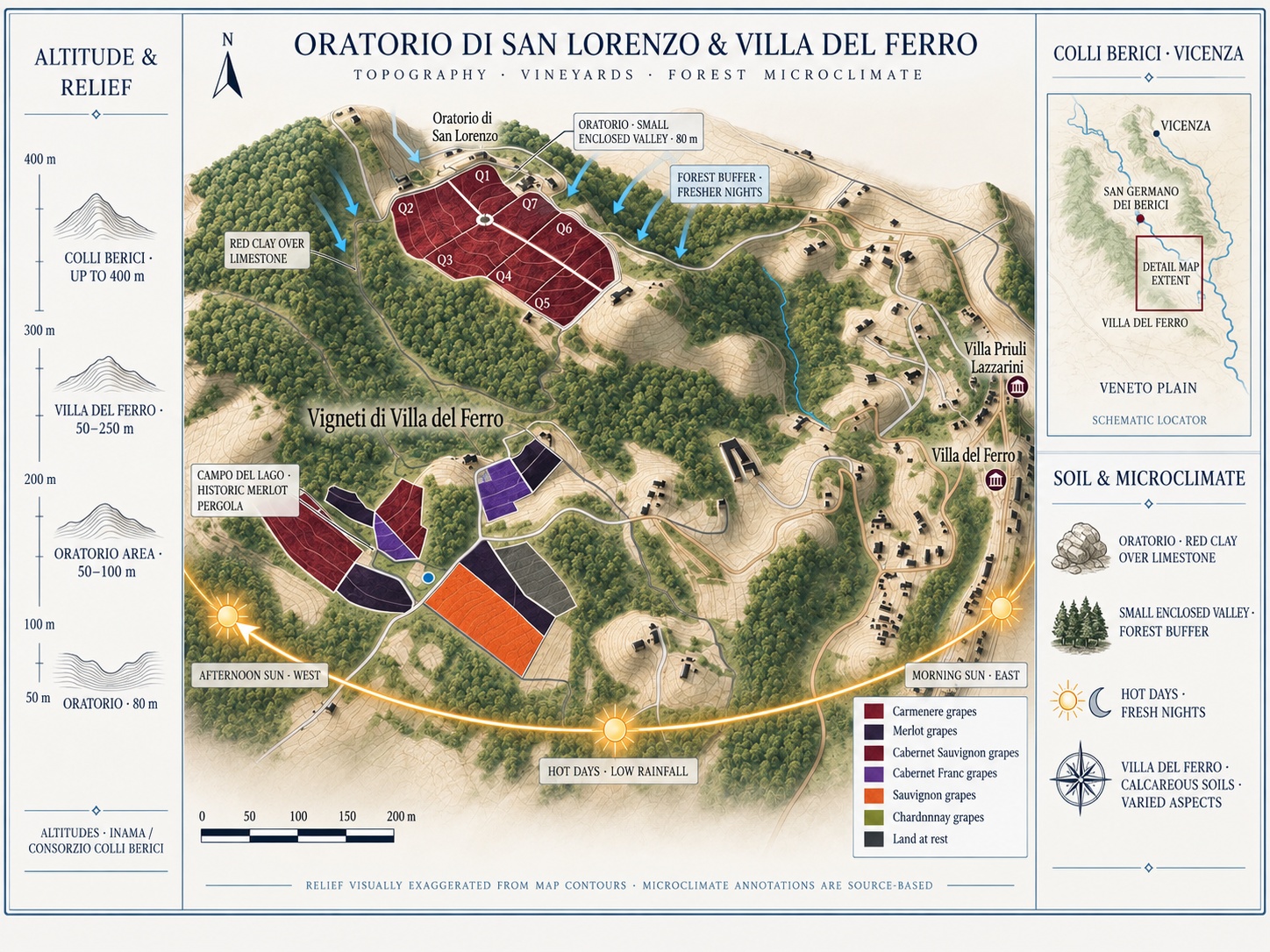 Open full map ↗
The Lonigo estate
The estate map brings the red-wine story down to vineyard scale: individual varieties, the house at the centre, south-facing slopes, Guyot training and the geological layers beneath the vines.
Open the Bradisismo dossier ↗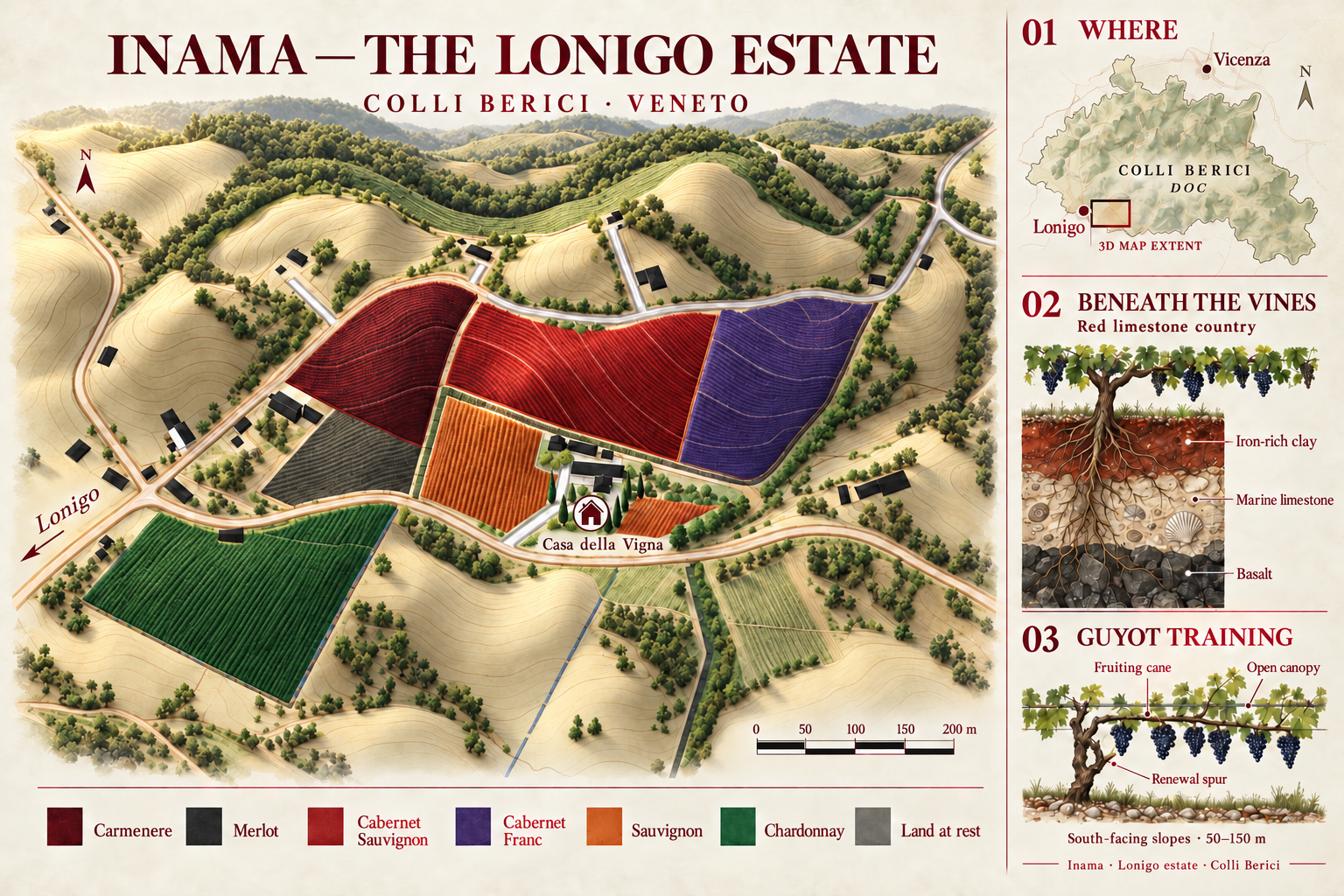 Open full map ↗
Visual culture
Stefano Inama conceived the first bottles and established the house style.
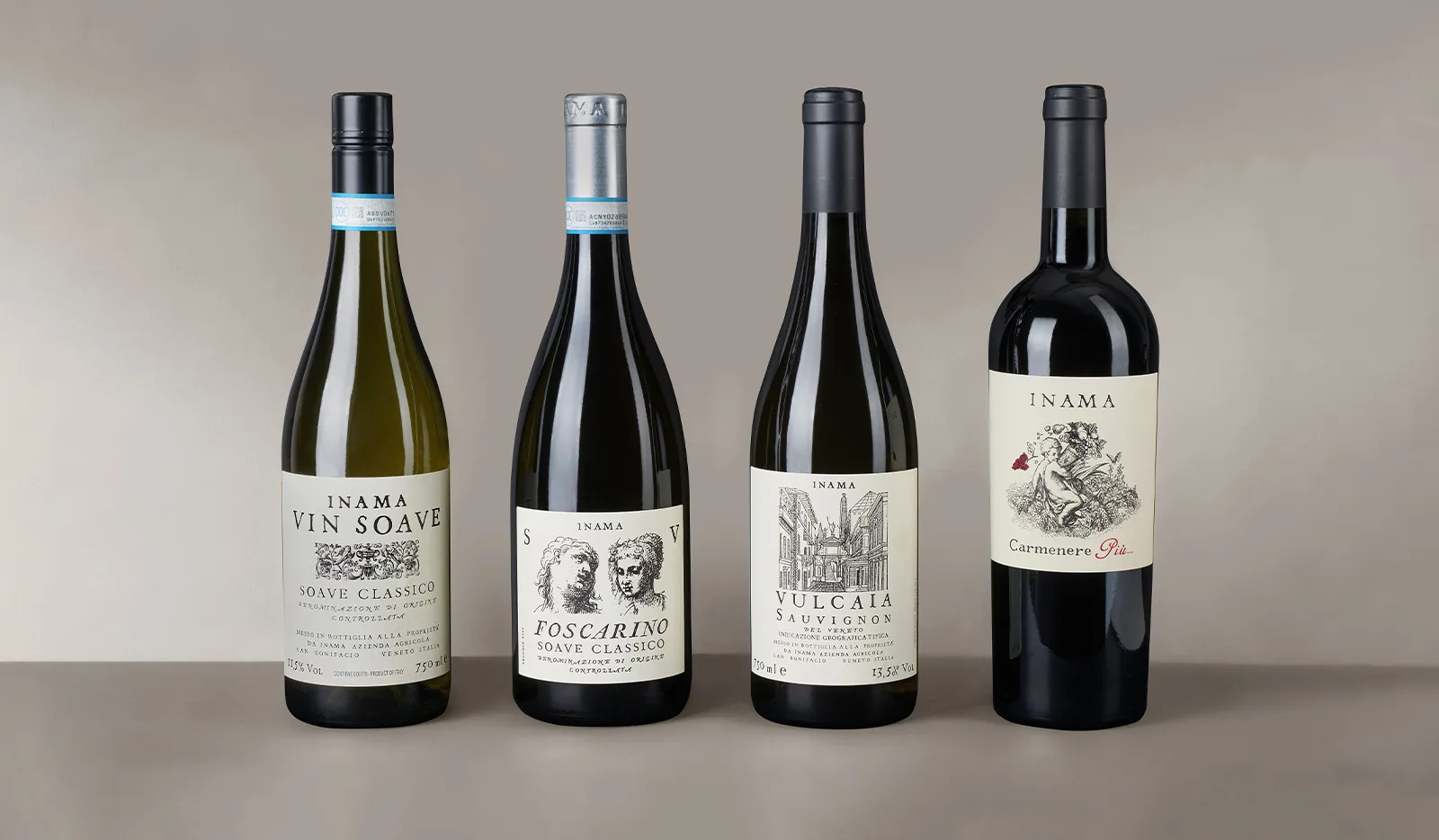
Historic engravings, Palladian proportion, classical typography and tactile paper create family resemblance without uniformity. Unusual names make each bottle memorable; every image has a source, a story and a reason to be there.
Foscarino’s paired heads derive from drawings by the English architect Inigo Jones, whose classicism drew on Palladio and Scamozzi.
The selection
Vin Soave opens the white-wine story. Carbonare and Foscarino make the differences within Garganega tangible. I Palchi completes the climb. Più introduces the reds; Bradisismo gives the US range a Cabernet-led bridge; Oratorio is the icon.
Fresh, floral Garganega
Chamomile · elderflower · citrus · dry almond finish
Premium BTG · aperitivo · seafood · vegetables
Explore Vin SoaveTaut, saline and precise
Tangerine · salt · iodine · electric freshness
Oysters · raw fish · Japanese menus · precise lists
Explore CarbonareLayered, textured and savoury
Field flowers · orchard fruit · almond · savoury finish
Richer fish · risotto · poultry · mature cheese
Explore FoscarinoSelected old terraces · the summit
Stone fruit · chamomile · citrus · flint
Coravin · tasting menus · fine-white flights
Explore I Palchi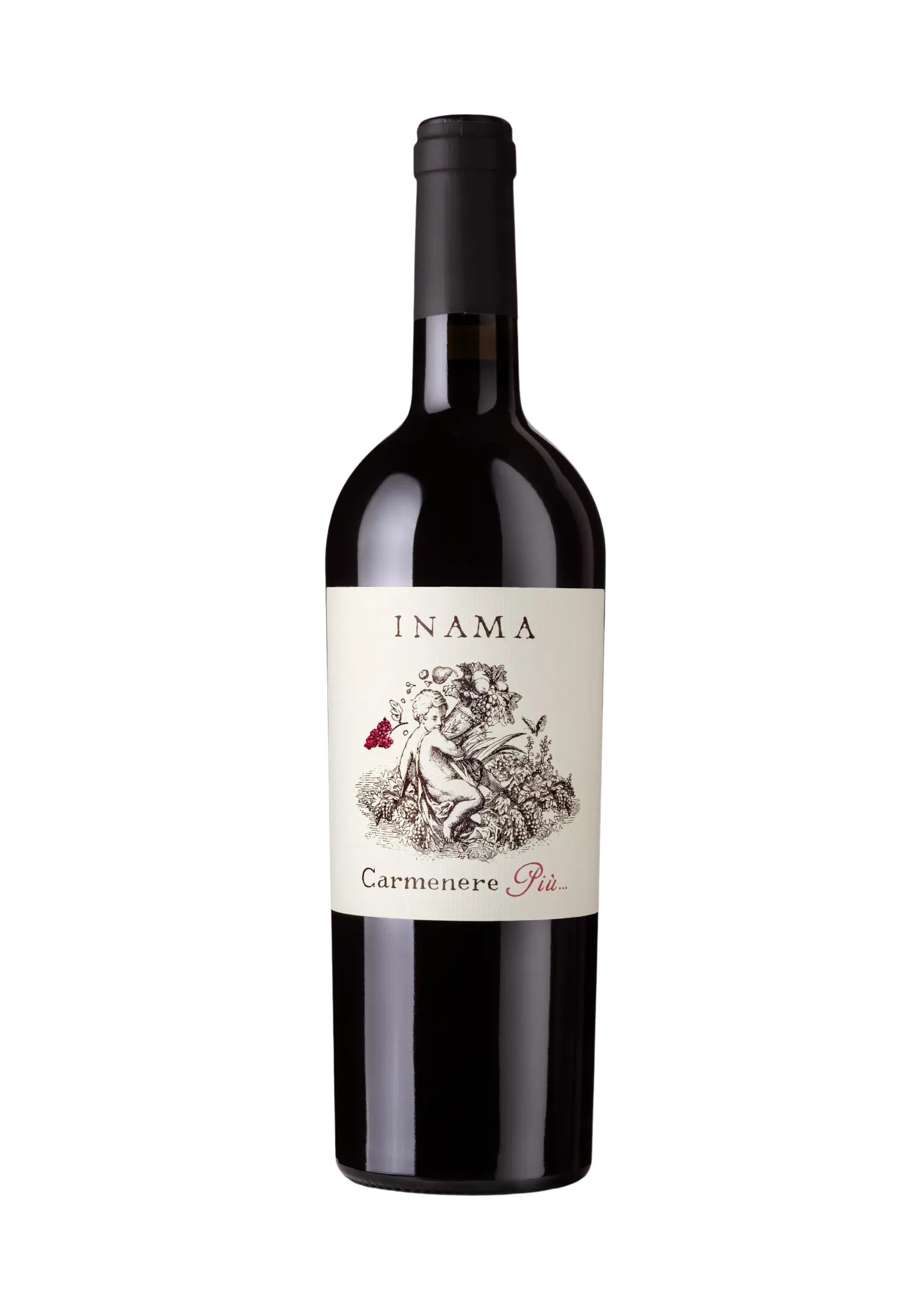
Carmenere & Merlot · fruit and spice
Dark berries · plum · cocoa · black pepper · fresh tannin
BTG red · pasta · grills · charcuterie
Explore Carmenere Più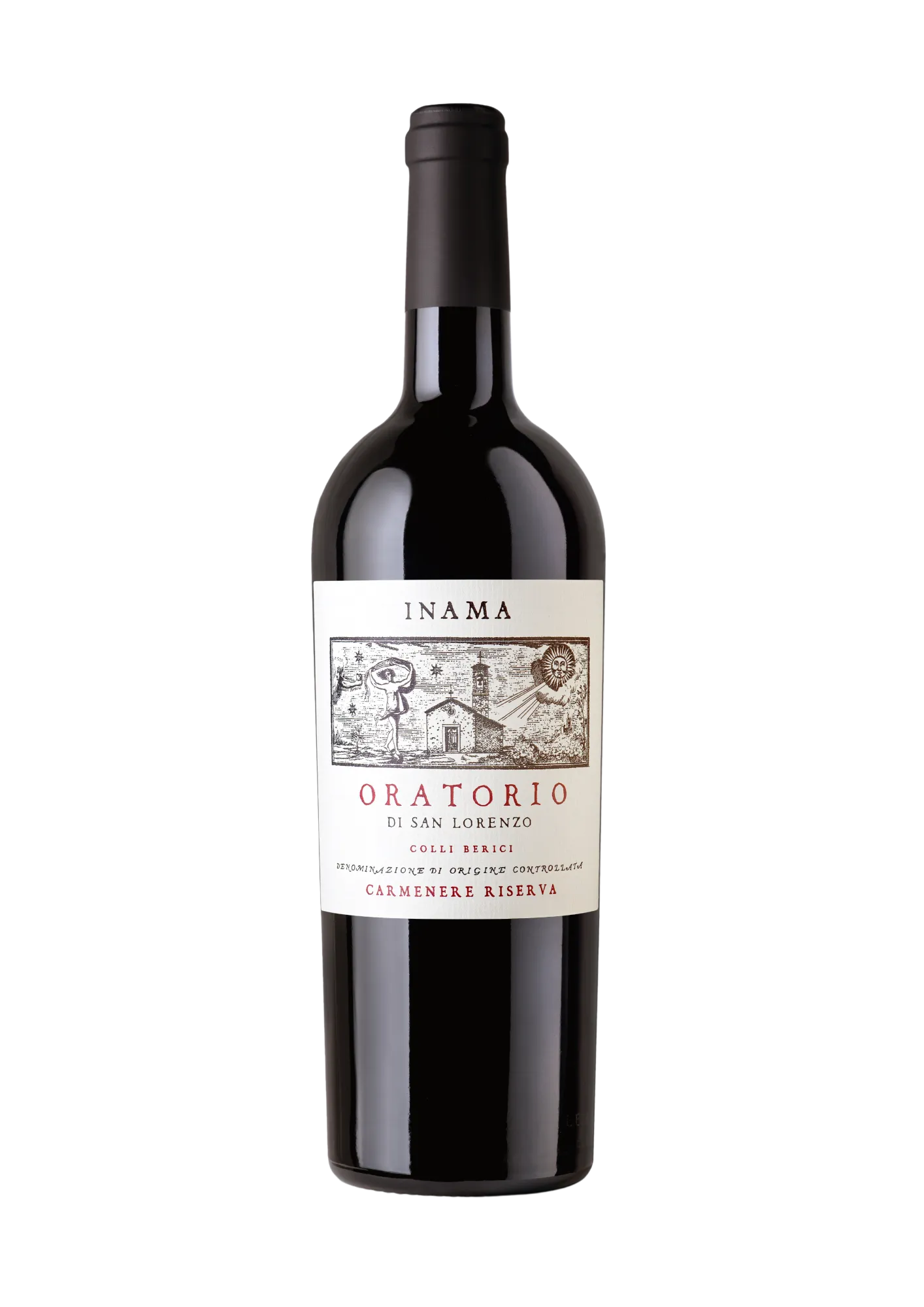
Cabernets & Carmenere · frame and lift
Cherry · dark berries · black pepper · cocoa
Steak · lamb · Bordeaux confidence · Venetian difference
Explore Bradisismo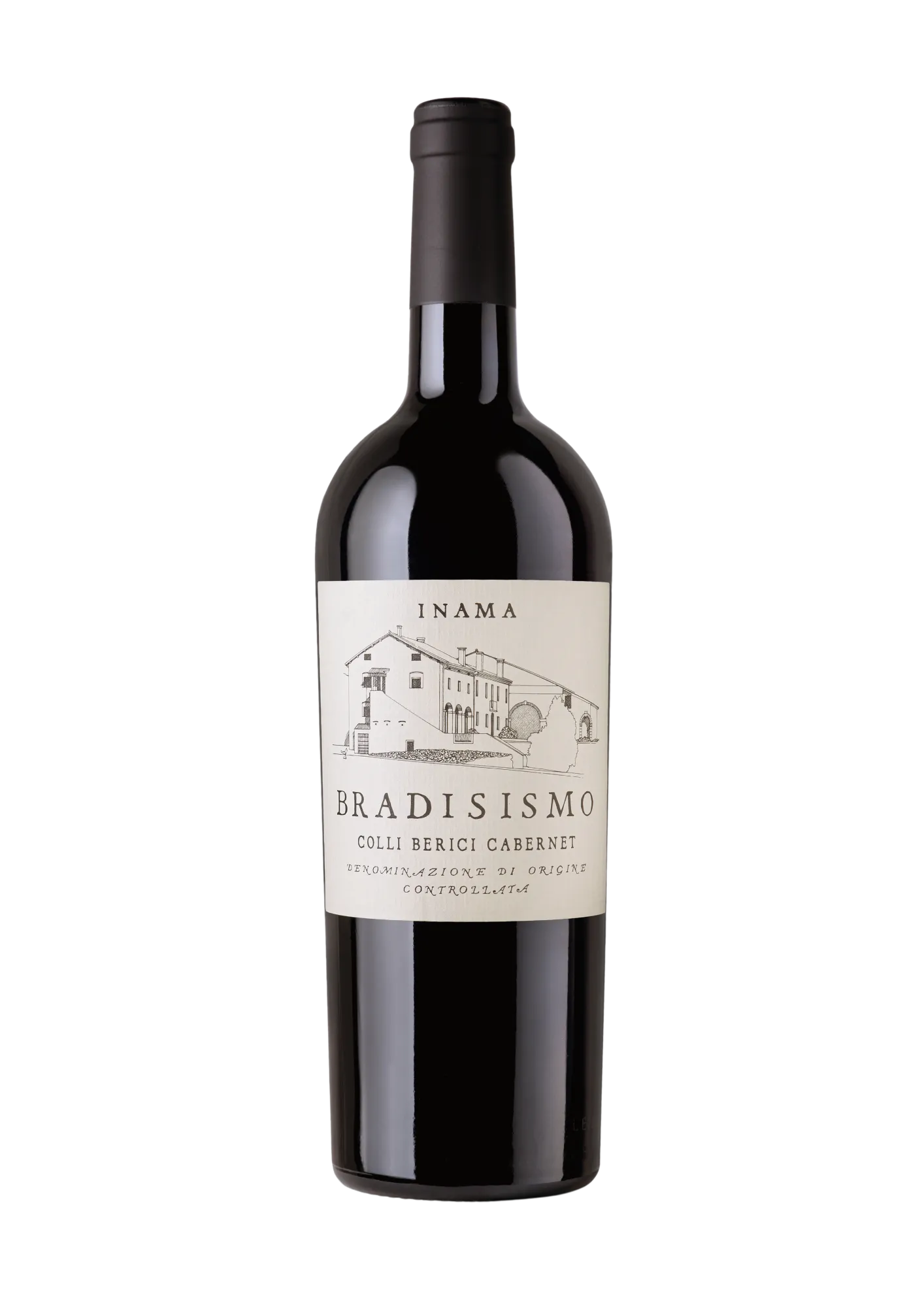
Pure Carmenere Riserva · the icon
Black berries · cocoa · pepper · herbs · exceptional length
Icon under Coravin · allocation · collector bottle
Explore Oratorio di San LorenzoImmediate pleasure, followed by a reason to ask where the wine comes from.
Hillside Garganega: floral, saline and quietly serious.
Dark fruit and pepper with freshness still switched on.
Turn the tasting into a comparison: one grape, different sites; one territory, greater precision.
Pour together: vertical Carbonare beside broader Foscarino.
A familiar Cabernet frame with Carmenere’s peppered Venetian lift.
The bottles that place INAMA naturally in a conversation about provenance, age and allocation.
Old terraces and micro-parcels: the complete white-wine statement.
Selected Carmenere from the enclosed valley.
Portfolio roles, not fixed prices. Match each release to the current US importer offer, state allocation and the account’s intended margin.
Soave Classico
Pieropan, Gini, Prà and Suavia are useful reference estates because independent writers discuss them alongside INAMA in Soave’s modern, site-conscious revival. INAMA’s clearest sales distinction is the deliberate contrast among its crus and vessels.
Decanter · producer context ↗Colli Berici
Piovene Porto Godi and Dal Maso help establish the appellation context. INAMA should be positioned through its sustained Carmenere project, the Oratorio hierarchy and Villa del Ferro—not through an unsupported claim of superiority.
Consorzio · producer register ↗For US managers
A two-sided field tool for training, distributor meetings and account visits. Side A explains the vineyard and cellar vision. Side B separates every wine by place, method, taste and sales role.
Open the manager field sheet ↗Independent recognition
Selected reviews of the cru whites and Oratorio. Each result belongs to the wine and vintage shown.
| Wine | James Suckling | Wine Advocate | Vinous | Falstaff | Wine Enthusiast |
|---|---|---|---|---|---|
| Carbonare 2023 | 94 | — | 93 | — | — |
| Foscarino 2022 | 95 | 92 | 93 | — | 97 |
| I Palchi 2022 | 96 | 94 | 94 | 94 | — |
| Oratorio 2020 | 95 | 94 | 94 | 95 | — |
Selected scores · these results do not transfer to a different vintage or establish a ranking against other estates.
For the next question
Start with the existing wine’s role. Carbonare and Foscarino offer a useful comparison within Garganega: a straighter, fresher expression beside a broader, more textured one. A second listing needs a distinct place with food and at a distinct price.
Introduce Più through dark fruit, pepper and the dish it accompanies. The grape’s unfamiliarity creates an opening for a recommendation, but also work for the team. Give them a flavour description they can use without a geography lesson.
With I Palchi, explain the selection of Foscarino’s old terraces. With Oratorio, explain the selected Carmenere and the valley. Connect that origin to the wine in the glass; scores can support the conversation once the style makes sense.
If budgets tighten, protect the opening wines and narrow the selection. If a cru is unavailable, explain the next vintage or offer a different style openly. Keep prices, availability and delivery terms in the current trade offer so the estate story stays useful.
Wine reference
Place, grape, method, taste—and the most useful route to the table.
A serious by-the-glass wine should invite a second glass before it asks for an explanation.
East-facing basalt, morning light and cooler air draw Garganega into a straighter line.
The founding hill opens rather than narrows: flowers, orchard fruit and almond arrive in layers.
The best-exposed old terraces of Foscarino, selected until power and air arrive together.
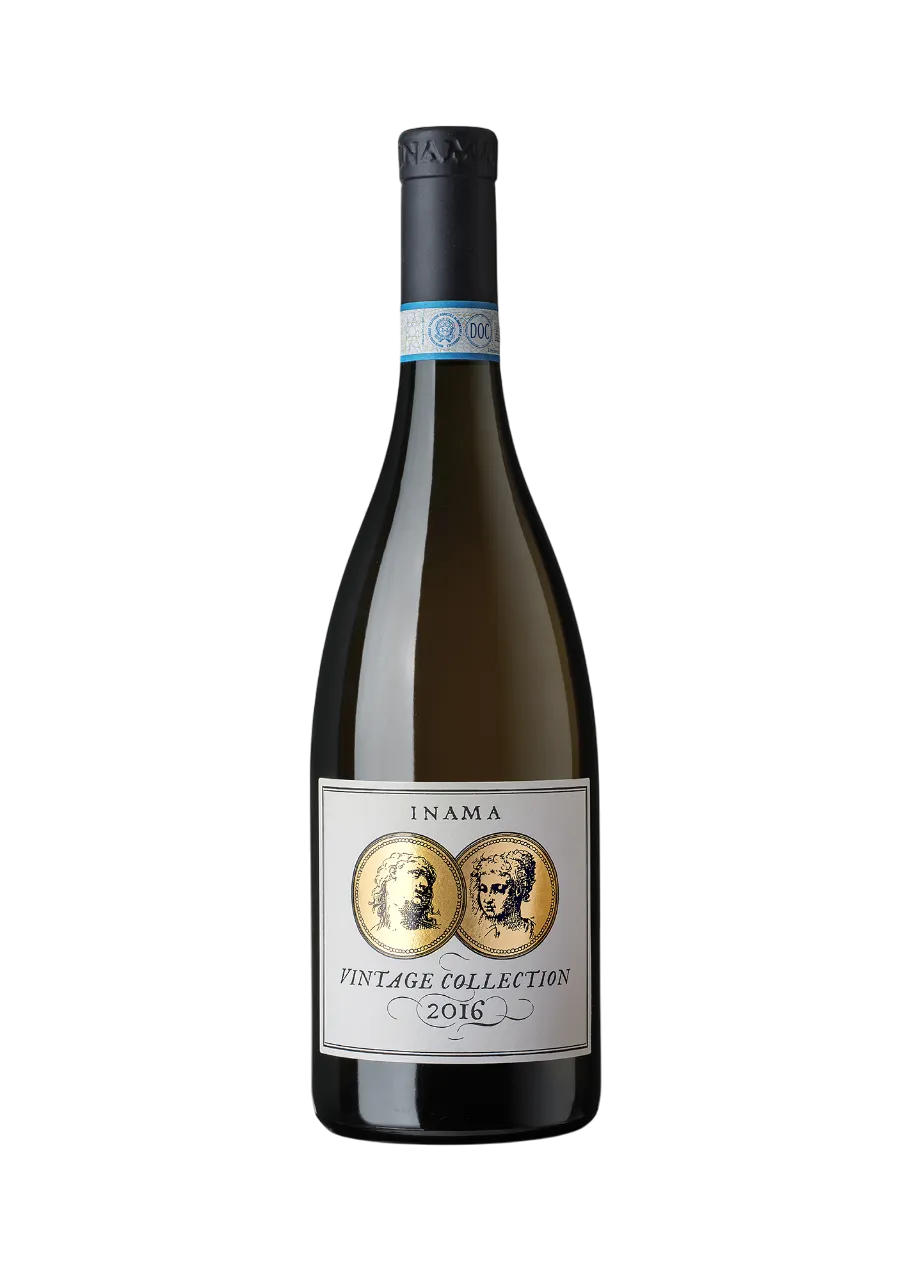
Extended fine-lees ageing turns time into evidence rather than mythology.
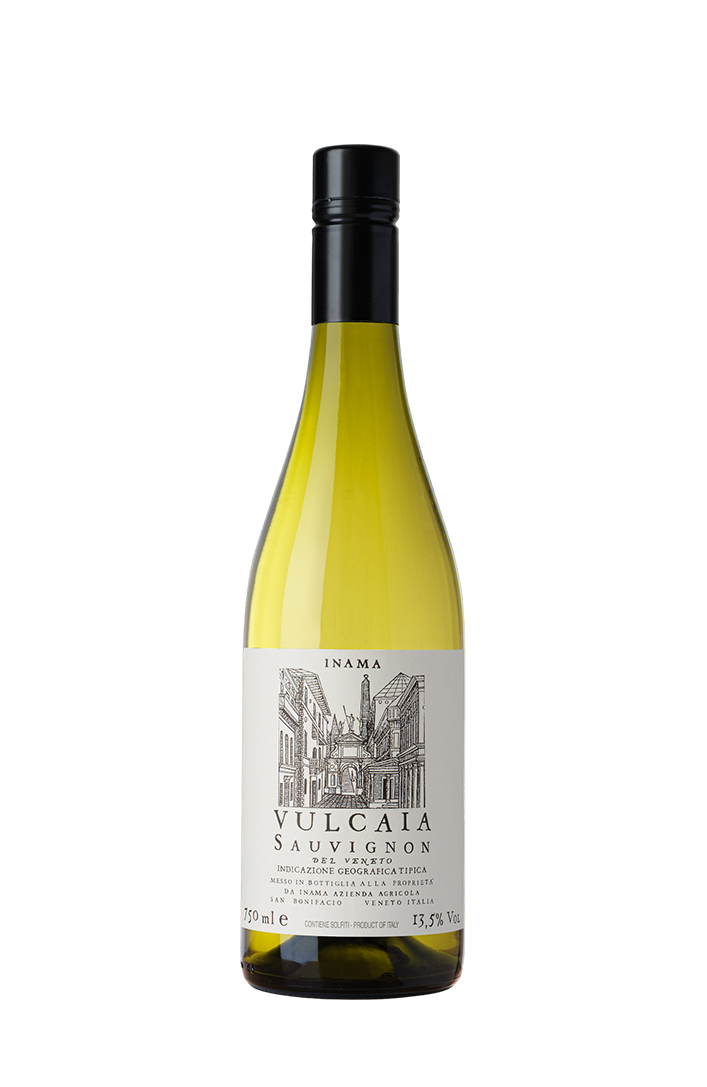
Sauvignon gives the first impression. Volcanic Soave shapes the finish.
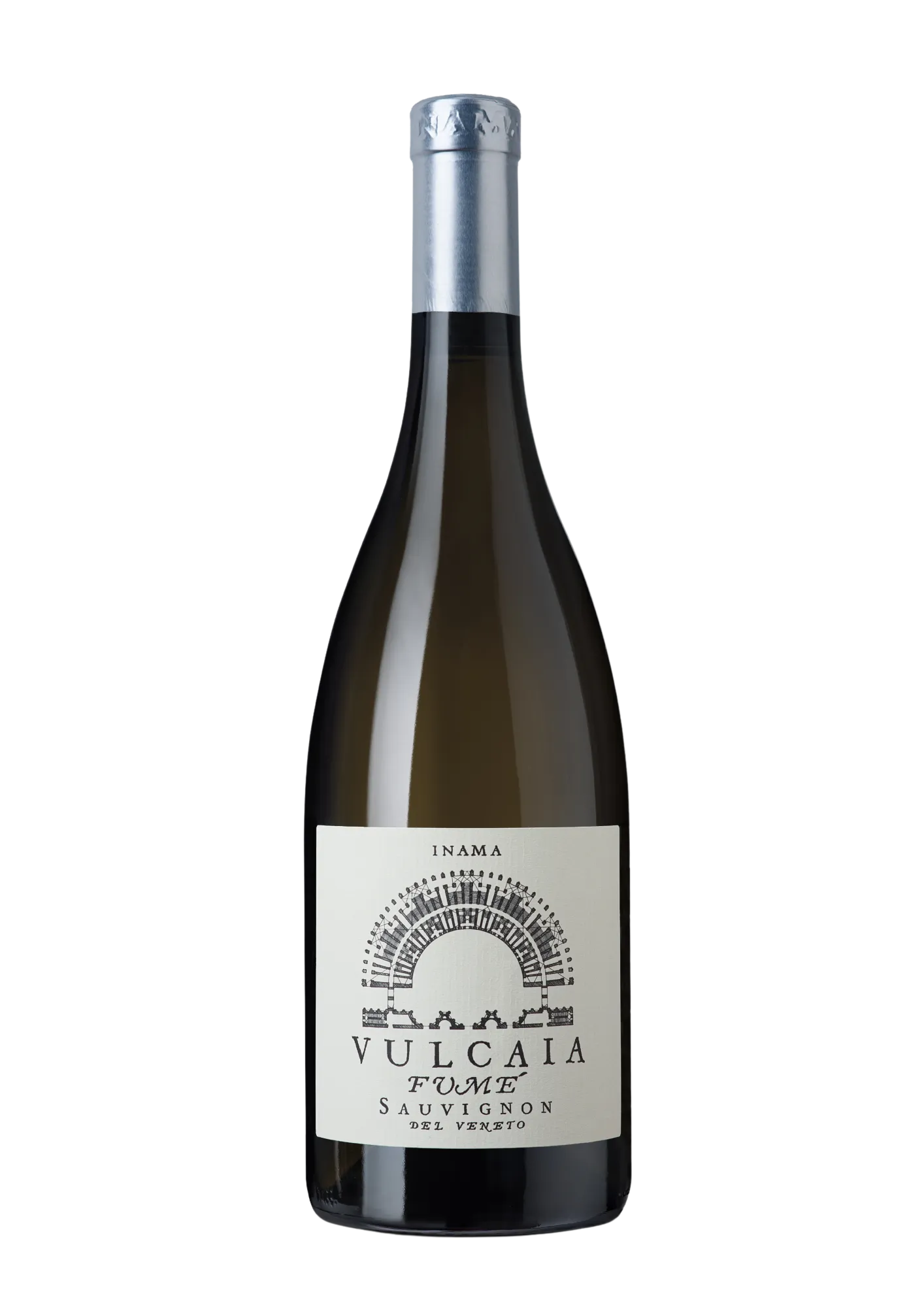
Fermentation in oak gives Sauvignon breadth without losing the volcanic line.
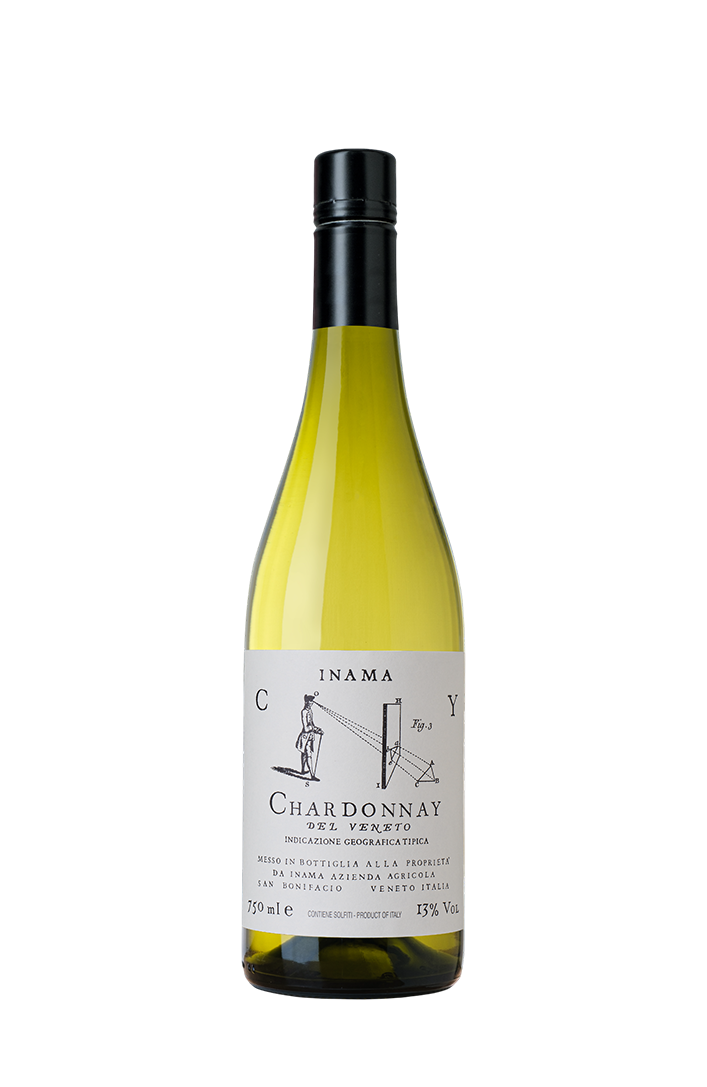
A familiar grape grown in an unexpected place—useful commercially, but never a compromise.
The most immediate route into the Berici: dark flavour with the lights still on.
The Cabernet-led wine that opened INAMA’s second territory in 1997.
The quality of the wine did not follow a designation; it helped make one necessary.
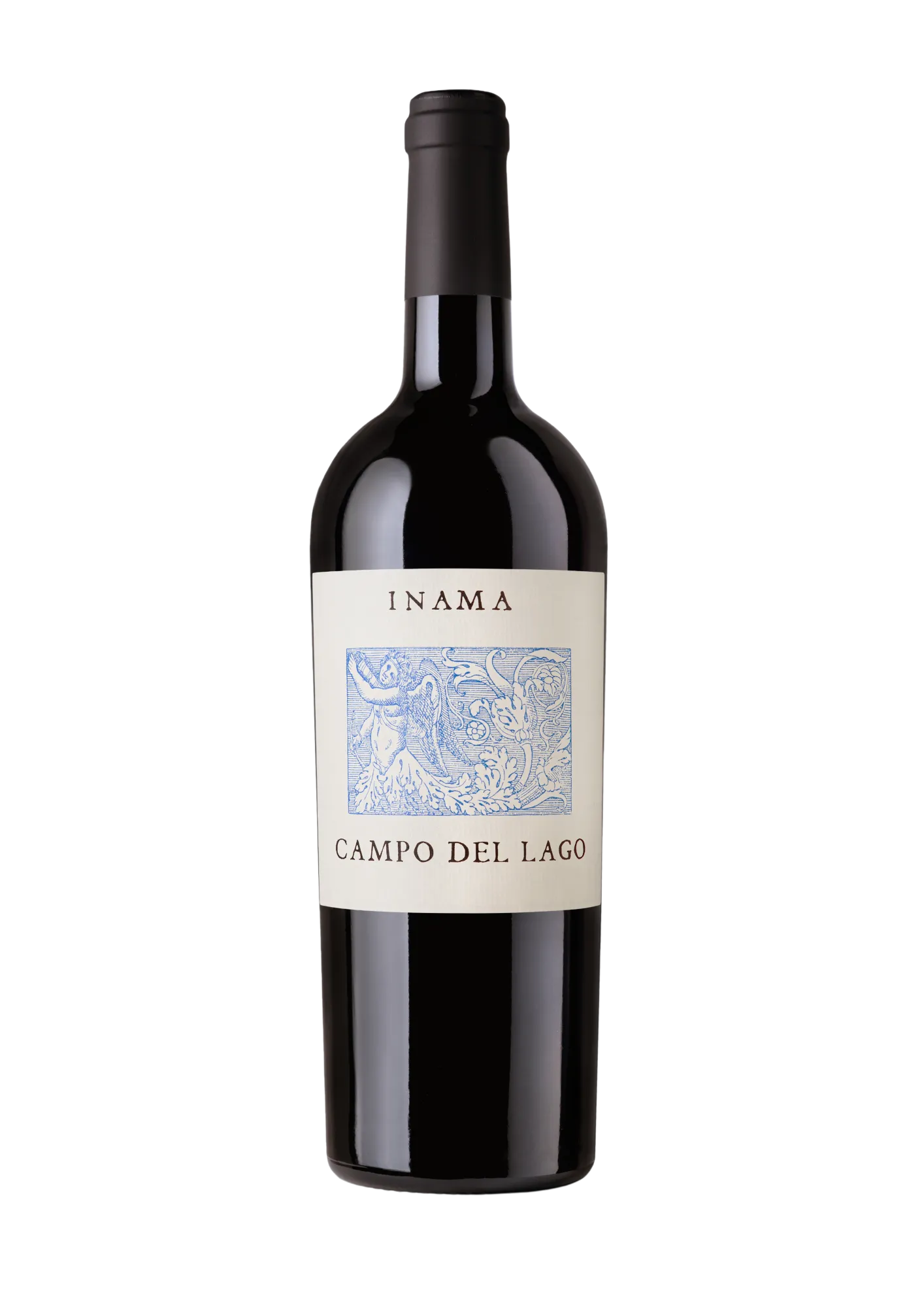
A historic Merlot from Villa del Ferro returned to production from its original vineyards.
Sources checked 8 September 2026. Wine details in the dossiers are attached to the named reference vintage wherever the estate provides one. Producer claims, independent assessment and editorial selling guidance are labelled separately.
The INAMA dossier
Open only what helps the conversation: how the estate works, how independent writers read it, and where to follow the family now.
Links open the original source.Viticulture · producer account
Cellar · producer account
Labels · documented house history
London · historical interview
The estate
A family business becomes credible through visible work: the site visit, the harvest, the tasting, the market—and the return to the vineyard. Return to the reference menu ↑
Contacts
London office · Brand manager
Estate & winery · San Bonifacio